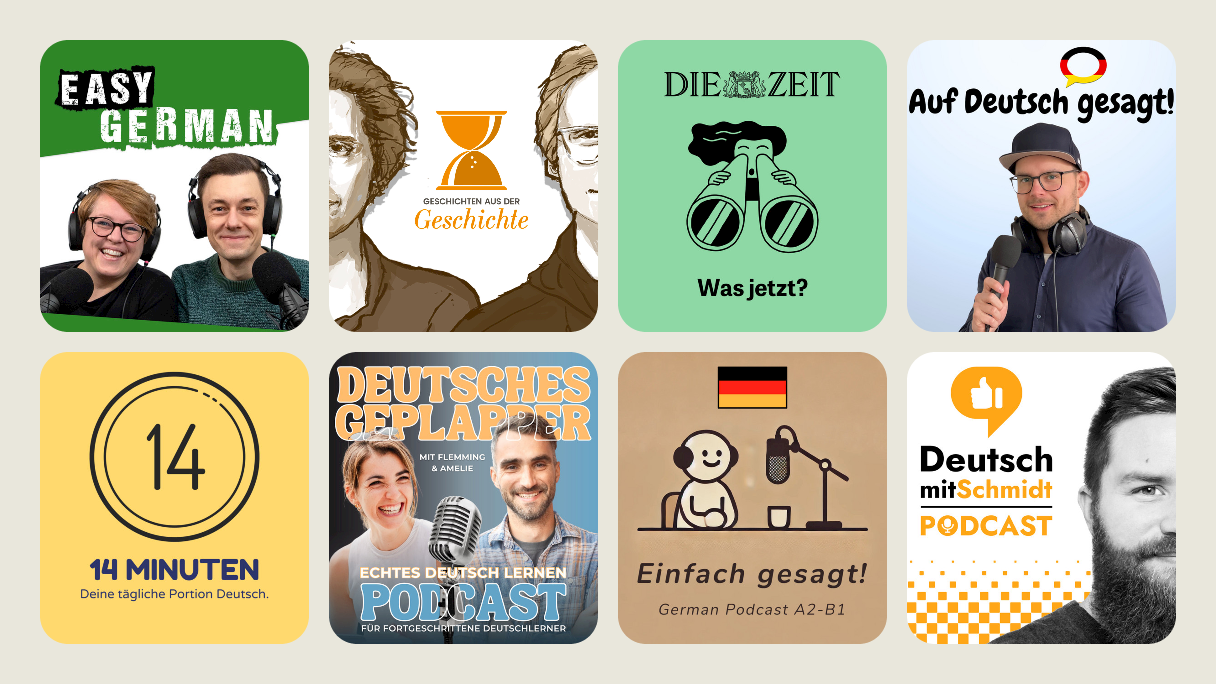
Most search results for German audio point you toward dry, slow lessons that sound nothing like real life. When you try to switch to native shows, the speed feels like a wall. We searched Reddit forums to find the intermediate German podcasts that actual learners use to survive this transition. These shows use natural speed but clear pronunciation, helping you step up from basic lessons without getting lost.
Instead of corporate recommendations, this list focuses on what works in the real world. You will find shows that discuss current events, culture, and daily life in a way that keeps you interested. These community favourites help you train your ear for natural phrasing and normal speaking speeds.
Quick answer: The best intermediate German podcasts focus on natural but clear speech. Learners on Reddit highly recommend Easy German for everyday conversations and Slow German for cultural topics. These shows bridge the gap between slow learner audio and fast native discussions, helping you build real listening confidence.
How this list was made. We read 20 Reddit threads across r/languagelearning and r/German, counted which resources the community actually recommends, then verified that every recommendation below is real and still available. The picks are ordered by how often independent threads recommend them.
Podcasts
14 Minuten
Patrick and Jan host a podcast that tackles German society, geography, and daily life in exactly 14 minutes per episode. Intermediate learners value these bite-sized cultural deep-dives because they come with accessible transcripts to help you practise listening. It is aimed at B1 to B2 students who want to build their vocabulary through real-world topics rather than dry grammar drills. But absolute beginners will find the natural pace overwhelming, and the strict time limit means complex topics are sometimes cut short before they can be fully explored.
Auf Deutsch gesagt!
Robin hosts a podcast for upper-intermediate learners who want to bridge the gap between textbook German and the street. Each episode features authentic interviews followed by a detailed vocabulary breakdown that explains slang, colloquialisms, and idioms. It is designed specifically for B2 learners who can already follow a conversation but struggle with natural, everyday expressions. Beginners will find the pace and complexity overwhelming, since there is no hand-holding or simplified grammar instruction.
Deutsch mit Schmidt
Sascha Schmidt hosts Deutsch mit Schmidt, a podcast designed for upper-intermediate and advanced learners tackling the B2 to C1 transition. Instead of basic travel phrases, these micro-episodes focus on high-level synonyms and complex sentence patterns. Schmidt presents sophisticated words and expressions through diverse sample sentences, showing you how native speakers actually structure their thoughts. It is highly focused, which lets you expand your vocabulary during a short walk. But beginners will find this completely overwhelming. There is no basic grammar instruction or slow-paced introductory dialogue here, so you need a solid foundation before you press play.
Deutsches Geplapper
Flemming and his sibling host Deutsches Geplapper, a podcast that features natural, colloquial dialogue and cultural chat. The episodes focus on real-world colloquialisms and slang for B2 learners. Listeners like this sibling dynamic because it shows how native speakers actually interact. But this focus on natural, fast-paced slang means the podcast is not for lower-level learners. Anyone below a solid B2 level will find the rapid-fire colloquial German too difficult to follow without constant pausing.
Easy German Podcast
Cari and Manuel host this unscripted daily podcast, which has become a favourite for intermediate learners. The community praises the natural banter and interviews, which makes it reliable for B1 to B2 immersion. Since the conversations are completely unscripted, you hear authentic German phrasing and real-world speed. But absolute beginners will struggle to keep up. The fast, natural pace means it does not cater to those below a solid B1 level, who will likely find the lack of structured grammar instruction frustrating. It is designed for listening practice, so you will need to look elsewhere to actually practise speaking.
Einfach gesagt!
Bridging the gap between beginner and intermediate German is a notorious hurdle. Einfach gesagt! handles this transition with solo monologues designed for A2 to B1 learners. The host speaks in clear, unhurried, yet entirely natural German, so you can follow along without getting lost in rapid-fire slang. It works well for building listening stamina and getting used to sentence structures. But because it features only one speaker talking at a deliberate pace, it will not suit advanced learners who need to practise following fast, multi-person conversations, nor will it help absolute beginners who lack basic vocabulary.
Geschichten aus der Geschichte
Daniel and Richard host a podcast where they share historical tales. Learners transitioning to native-level content praise the hosts for their clear enunciation, which makes complex historical topics easier to follow. It suits upper-intermediate and advanced learners at B2 or C1 level who want to test their listening skills on real-world German. But because the show is made for native speakers, the vocabulary is dense and the pace is natural. Beginners will find the lack of simplified language or vocabulary support overwhelming.
Sloeful German
Sloeful German handles the middle ground of language learning by offering solo storytelling delivered at a deliberate, measured pace. Designed for intermediate B1 and B2 learners, this podcast features natural German stories with free parallel transcripts to help you follow along. The slow delivery helps you absorb sentence structures without feeling overwhelmed. But because it is a solo show spoken slowly, it will not prepare you for the speed of real-world group conversations. Absolute beginners will also find the immersive German narrative too challenging to follow without a basic vocabulary.
Was jetzt?
DIE ZEIT produces a daily current affairs podcast called Was jetzt?, which offers a direct route into authentic German media. It suits upper-intermediate and advanced learners at B2 or C1 level who want to test their listening skills against a normal native pace. Listeners value the clear articulation of the hosts, which makes it a useful transition tool before diving into unedited street German. But this is not a language-learning programme. It does not slow down, simplify its vocabulary, or offer translations, making it entirely unsuitable for anyone still building their basic grammar.
FAQ
What is the best German podcast for intermediate learners?
Learners on Reddit frequently point to Easy German as the top choice. It features natural conversations about daily life with clear pronunciation. Another popular choice is Slow German, which explains cultural topics at a slightly reduced pace. Both shows help you transition toward native speed without feeling overwhelmed.
When am I ready for intermediate German podcasts?
You are ready when basic learner audio feels too easy and predictable. If you can understand the main points of simple stories but struggle with normal native speed, intermediate shows are the logical next step. They challenge your ear while keeping the vocabulary accessible.
Can intermediate learners follow native German podcasts?
It is difficult but possible if you choose the right topics. Shows about familiar subjects or daily life are easier to follow than complex political debates. Using transcripts or slowing down the playback speed can also help you follow along as your listening skills grow.
What German level do I need to follow the news in German?
You generally need an upper-intermediate level to understand standard news broadcasts. The vocabulary in news reports is formal and specific. You can prepare by listening to simplified news podcasts, which use clearer language and slower speech to report on current events.
Listening to podcasts trains your ear, but speaking is how you make the language your own. If you want to practise speaking alongside your listening, you can start with HearSay to build conversational confidence directly in WhatsApp.