Most search results for language resources just recycle lists of the same old apps. If you are tired of slow, robotic voices and want to hear real conversations, you need recommendations from actual learners who have made the leap. The language learning community on Reddit filters out marketing fluff to find what actually works during a busy commute.
This guide lists the top intermediate Italian podcasts and channels that real learners recommend. These resources help you move from simple classroom exercises to fast, natural speech, turning your daily travel time into study hours.
Quick answer: For intermediate learners, the best audio resources use natural speed but clear pronunciation. Reddit users' favourite podcasts focus on cultural stories and everyday language, which help you move past slow, simplified learner tracks during your daily commute.
How this list was made. We read 27 Reddit threads across r/languagelearning and r/italianlearning, counted which resources the community recommends, and verified that every show below is active. The picks are ordered by how often independent threads recommend them.
Podcasts
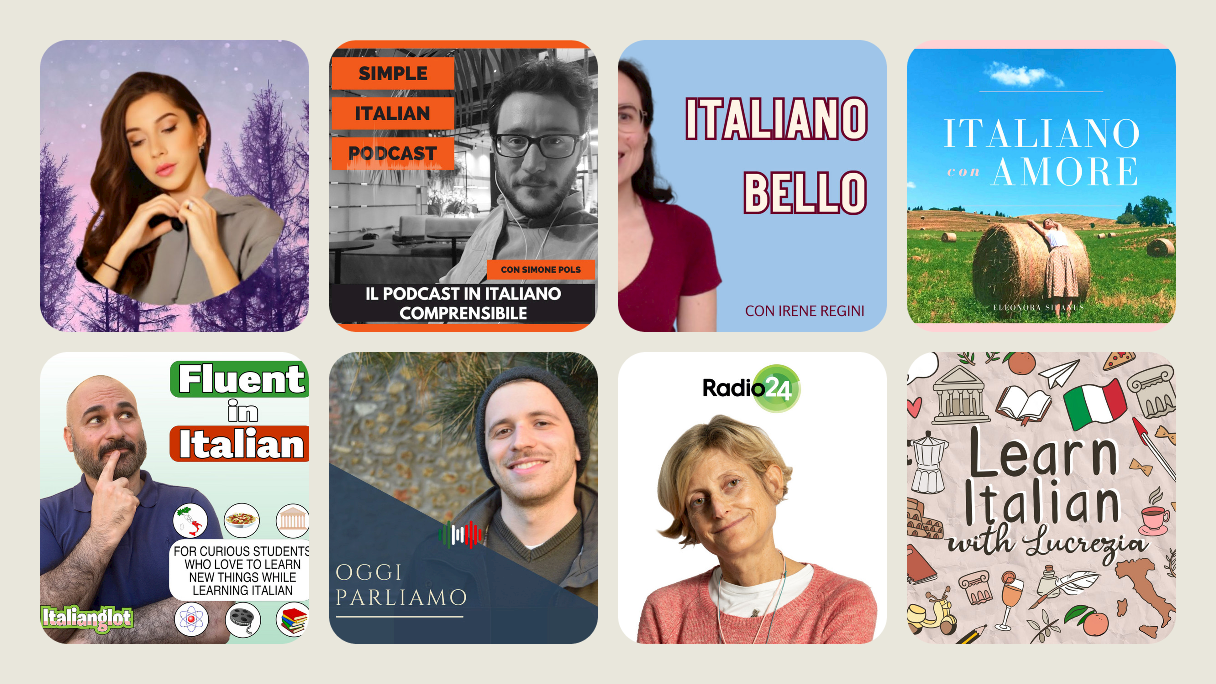
Radio 24
Radio 24 is a national Italian talk radio station. The station packages its live broadcasts as podcasts, giving you unedited, real-speed discussions and everyday arguments. Learners value this stream because it helps them adapt to the pace of actual Italian speech. The main challenge is the speed. Because hosts and guests speak at a natural native tempo with no concessions for learners, the content is difficult for anyone below a solid B2 level. Beginners and early intermediates will find the rapid debates on current affairs hard to follow.
Coffee Break Italian
Coffee Break Italian uses a teacher-student format to explain intermediate grammar and travel dialogues. It is designed for your daily commute, explaining complex structures in English so you can grasp tricky rules on the move. This bilingual approach works for A2 to B2 learners who want step-by-step guidance. However, because the podcast relies heavily on English explanations, it will frustrate advanced speakers who want pure Italian immersion or fast-paced listening practice.
Fluent in Italian with Italianglot
Carmine, a polyglot and educator, hosts this intermediate podcast to connect basic vocabulary with complex cultural discussions. The programme covers topics like philosophy, cinema, art, and science, but explains them using intermediate grammar. It works for B1 to B2 learners who want to move past everyday small talk into intellectual subjects. However, absolute beginners will struggle with the abstract themes, while advanced speakers looking for complex sentence structures might find the simplified grammar too restrictive.
Italiano Bello
Irene Regini hosts short episodes focused on daily life, literature, and mindfulness. This podcast uses simplified but authentic Italian to help you move from beginner to intermediate levels. The gentle pace is easy to follow, especially for A2 to B1 learners who find native-speed media overwhelming. However, it is not designed for advanced speakers. If you are already comfortable with rapid, unscripted debates or complex political discussions, you will find the simplified vocabulary and deliberate delivery too slow.
Italiano con Amore
Eleonora Silanus focuses on regional history, food, holidays, and literature in this podcast. Her clear voice and deliberate pace make the content accessible for intermediate learners at the B1 to B2 level. It helps you move away from beginner materials by using natural but clear language. However, absolute beginners will struggle to follow the monolingual Italian, and advanced speakers might find the slow speed frustrating. It does not offer interactive speaking practice, so you will need to find other ways to practise your own conversation skills.
Learn Italian with Lucrezia
Lucrezia Oddone hosts this podcast, which uses audio diaries and cultural essays to connect classroom Italian with real-world conversations. Designed for intermediate learners at the B1 to B2 level, the episodes run at a natural native pace but remain accessible because of her clear vocabulary and sharp articulation. It helps build listening stamina and absorb cultural context. However, absolute beginners will find the normal speed of delivery too fast, and the show does not provide any structured speaking practice. You will need to look elsewhere if you want to actively speak.
Oggi Parliamo
Andrea Callegaro hosts a podcast that delivers short Italian practice in five to ten minutes. Each episode focuses on a single grammar point, a useful expression, or a current news story, spoken cleanly and slowly to help intermediate learners. This short format works well during a morning commute or a quick dog walk. However, the slow pace and deliberate delivery mean it will feel too basic for advanced speakers who want natural, rapid-fire native conversations. Absolute beginners will also struggle because there are no English explanations.
Podcast Italiano
Davide Gemello hosts this show, which is widely recommended by online communities for intermediate Italian learners. It delivers monologues on psychology, history, and language, alongside unscripted conversations that help you adapt to natural speech. Because it is audio-only, you can listen while you commute or walk the dog. However, the content targets the B1 to B2 bracket, meaning absolute beginners will find the unscripted discussions and complex topics overwhelming. It also lacks structured grammar exercises, so you will need to look elsewhere if you want formal drills.
Simple Italian Podcast
Simone Pols hosts this weekly show based on comprehensible input theory. He speaks clearly and deliberately about travel, history, and personal growth, keeping the entire episode in Italian. Learners at the A2 to B2 level value his steady pace, which helps them stop translating in their heads. However, because he never switches to English, absolute beginners will find the lack of translations overwhelming. The deliberate, slower speed also means advanced speakers looking for rapid, natural-paced native conversation will want to look elsewhere.
YouTube channels
Elisa True Crime
Elisa De Marco covers real-world mysteries on her YouTube channel, Elisa True Crime. Upper-intermediate and advanced learners at B2 to C1 level recommend her videos for their native-speed Italian. Elisa speaks in a clear, expressive, and dramatic style, making it easier to follow the narrative than standard fast-paced broadcasts. However, this channel is not for beginners or lower-intermediate students, who will get lost in the rapid, complex vocabulary. It is also a poor fit if you prefer lighthearted topics, as the focus remains strictly on dark, real-life crime cases.

FAQ
What is the best Italian podcast for intermediate learners?
The most effective option is a comprehensible input podcast that discusses real topics at a slightly controlled pace. Look for shows where the hosts speak clearly about history, culture, and daily life without using overly complex grammar, allowing you to follow along without constantly pausing.
How can I improve my Italian listening comprehension?
Focus on active listening during your commute by shadowing the speaker. Repeat phrases out loud to train your pronunciation. Combine this with regular exposure to natural speech, gradually moving away from slow, artificial audio designed for absolute beginners.
Are there free Italian podcasts with transcripts?
Yes, many recommended shows offer free episodes, though some creators keep full transcripts behind a paywall or support page. Using transcripts helps you connect spoken sounds to written words, which trains your ear during study sessions.
Should intermediate learners listen to native Italian podcasts?
Yes, but select them carefully. Jumping straight into fast-paced news can be frustrating. Start with native shows focused on storytelling or simple conversations, which offer an easier transition to full-speed speech than chaotic talk shows.
Listening to podcasts helps your comprehension, but you also need to speak. If you want to practise your conversational skills hands-free during your daily walk or commute, you can use HearSay for personalised audio lessons.