Language learners often get stuck in a trap where they listen to French audio for hours but still freeze when they try to speak. Standard resource lists usually suggest random shows that are either too slow or too fast, which stalls your progress. To find what actually works, we analysed what learners on Reddit suggest for moving from passive listening to active speaking. The community agrees that the best intermediate French podcasts bridge the gap between slow, artificial speech and natural conversations. Instead of letting the sound wash over you, the right audio helps you notice how native speakers link words so you can mimic them in real conversations.
Quick answer: The best intermediate French podcasts use natural language spoken at a slightly slower pace. Reddit threads highly recommend shows with transcripts, which help you match written words with spoken sounds. You can use these resources to transition from passive listening to active speaking by shadowing and repeating key phrases.
How this list was made. We analysed 33 Reddit threads across r/languagelearning and r/French, tallied the resources the community recommends, and verified that every show below is active and available. The picks are ordered by how often independent threads recommend them.
Podcasts
Change ma vie: Outils pour l'esprit
Clotilde Dusoulier hosts a self-development podcast for native speakers that helps build upper-intermediate listening skills. Listeners praise the show for its clear, well-articulated French, which is easier to follow than rapid-fire radio. Because it is designed for native speakers, the content suits B2 learners who already have a solid vocabulary. Beginners and lower-intermediates will find the abstract self-help concepts and lack of translation frustrating. It focuses entirely on personal growth rather than language instruction, so you will not find grammar explanations or structured practice here.
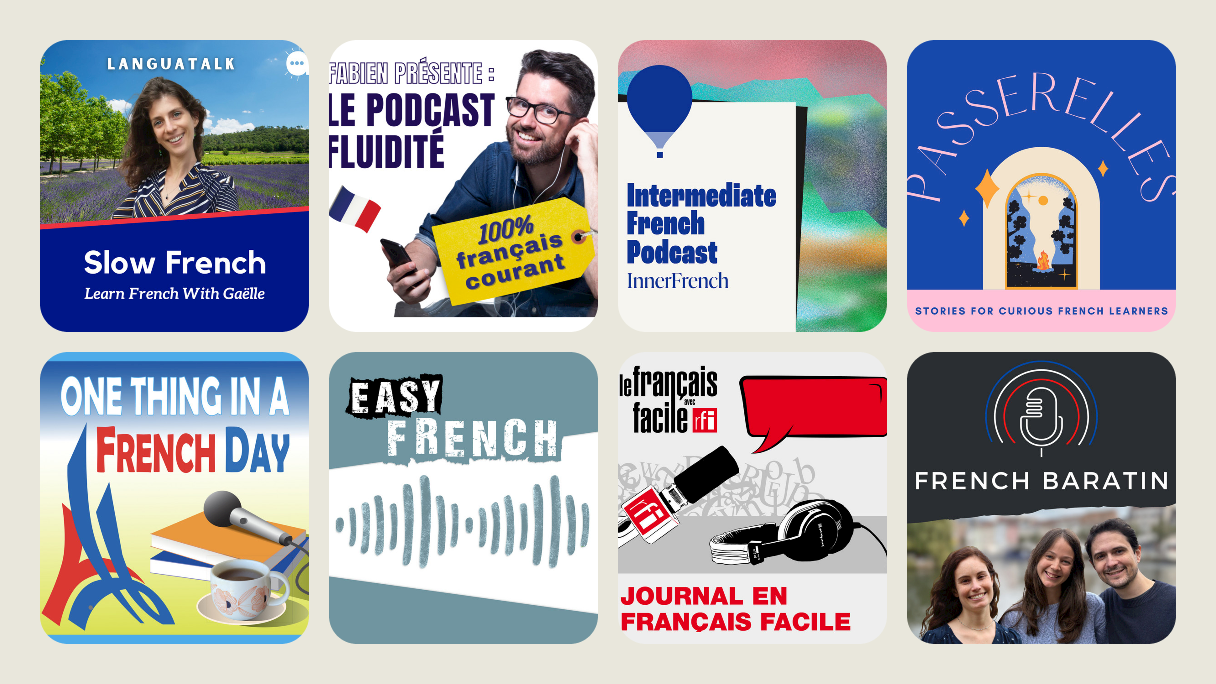
Easy French Podcast
Hélène and Judith host this audio series, delivering unscripted conversations about daily life in France. Intermediate learners at B1 to B2 level value the show because the hosts speak slightly slower than normal, making it easier to follow without losing the natural flow of real speech. Interactive transcripts and vocabulary helpers support your listening. However, absolute beginners will find the unscripted French overwhelming, as the show avoids structured grammar lessons or English explanations. It is designed for those who already have a foundation and want to transition to natural, everyday discussions.
French Baratin
Moving past intermediate French means leaving behind carefully scripted, slow-motion monologues. French Baratin tackles this directly with authentic debates about contemporary French society. The hosts speak at a natural, native pace and use real-world vocabulary, but they avoid the chaotic overlapping talk that makes normal French radio hard to follow. This helps B2 and C1 learners build native-speed flow. However, beginners and lower-intermediates will find this pace punishing, as there are no simplified explanations or slowed-down segments to help you catch your breath.
innerFrench
Hugo Cotton hosts this intermediate podcast to help learners bridge the gap between textbook exercises and real conversations. He discusses complex topics like history, society, and psychology using slightly slowed, clear French. This deliberate pacing makes it accessible for B1 to B2 learners who want to engage with serious ideas without getting lost in rapid-fire native speech. However, because the audio is intentionally slowed down, it will not prepare you for the chaotic speed of everyday street French. Absolute beginners will also find the vocabulary and sentence structures far too challenging.
Journal en français facile
Radio France Internationale delivers daily global news tailored for upper-intermediate learners with this structured podcast. By using simplified language and a slightly slower pace, it helps B2 students transition towards native-speed broadcasts. The community values it for building specific vocabulary around politics and international affairs. However, the focus on serious global news means you will not hear casual, everyday slang or conversational banter. It is also too fast and complex for beginners or lower-intermediates, who will likely find the dense subject matter and rapid delivery overwhelming.
LanguaTalk Slow French
Gaëlle hosts this weekly podcast, speaking slowly and deliberately about French culture and history without ever switching to English. It targets A2 to B1 learners who want to transition to native content but still need a slower pace. The interactive transcripts help you follow along as you listen to topics ranging from daily life to historical events. However, because Gaëlle deliberately slows her speech down, it will not prepare you for the rapid, chaotic pace of real-world conversations. Advanced learners at B2 or above will find the simplified vocabulary and measured delivery far too basic.
Le français avec fluidité
Fabien hosts this intermediate podcast, speaking at a relaxed pace to help you build your listening vocabulary. He covers French geography, culture, and history, which helps B1 learners who want to move past basic drills but still struggle with native-speed speech. The free transcripts are a major help for tracking difficult words. However, because Fabien deliberately speaks slowly, advanced learners will find the tempo frustratingly sluggish, and absolute beginners will struggle to follow the French-only explanations without constantly pausing. It focuses purely on passive listening, so you will need to look elsewhere to practise your speaking.
One Thing in a French Day
Laetitia shares three short stories a week about her daily life in Paris, offering intermediate learners a window into natural spoken French. These bite-sized episodes focus on simple, narrated slices of her day. The podcast helps B1 and B2 listeners get a feel for real-world pronunciation and rhythm without feeling overwhelmed. However, because the episodes focus entirely on these gentle, personal anecdotes, this podcast will frustrate absolute beginners who still need basic grammar instruction. It also lacks the complex vocabulary or formal debates required by advanced learners aiming for C1 fluency.
Passerelles
Emilie hosts this beautifully paced podcast, exploring human psychology, travel, and lifestyle through the lens of French culture and sociology. Designed specifically for intermediate B1 to B2 learners, the episodes offer an articulate and accessible way to build listening confidence. Listeners value the thought-provoking themes that move beyond basic tourist vocabulary. However, because the language is carefully structured and delivered at an accessible pace for intermediates, absolute beginners will struggle to follow the sociological topics, while advanced speakers looking for rapid, chaotic native conversations may find the deliberate speed too comfortable.
Transfert
Slate's podcast Transfert plunges you straight into the raw, unscripted lives of everyday French people. Listeners recommend it for its gripping, true stories told by the individuals who actually lived them. Because these are highly personal, native-level narratives, the podcast suits upper-intermediate and advanced learners at B2 to C1 level who want to master natural, conversational French. However, the unscripted nature means speakers use colloquial language, fast pacing, and regional accents without any learner-focused scaffolding. Anyone still building basic vocabulary or needing clear, slow speech will find this raw storytelling incredibly overwhelming.
FAQ
What is the best podcast for intermediate French?
Learners on Reddit frequently recommend intermediate French podcasts that use clear, natural language. Shows that discuss interesting topics like history, culture, and science at a manageable speed work best. These resources help you build vocabulary without feeling overwhelmed by fast native speech.
Can you learn French just by listening to podcasts?
Listening helps you understand spoken French, but it is only part of the process. To speak confidently, you must actively practise speaking. You can do this by repeating what you hear, shadowing the speaker, or using audio courses that prompt you to speak back.
What are the best French podcasts with transcripts?
The most popular options offer a full transcript for each episode. Reading the text while listening helps you connect spelling with pronunciation. Many learners use these transcripts to note down useful phrases and practise reading aloud to improve their speaking skills.
How can I understand fast native French speakers?
To understand fast speech, start with slow French podcasts and gradually increase the difficulty. Focus on how native speakers link words together. Active listening, where you write down what you hear or shadow the audio, trains your brain to catch fast sounds.
Listening to podcasts is excellent for training your ears, but speaking is how you build real fluency. If you want to move beyond passive listening, start with HearSay. It delivers personalised audio lessons directly to your phone, allowing you to practise speaking and get comfortable with real conversations.