Danish spelling famously hides how the language actually sounds. If you try to read your way to fluency, silent letters and unexpected vowels will confuse you. Text-heavy apps do not help you speak. To sound like a local, you must train your ears and mouth with tools that focus on real speech. This community-curated list is a practical Danish pronunciation guide. We gathered the podcasts, channels, and tools that learners use to master these tricky sounds. These resources help you move past spelling and start speaking.
Quick answer: To master Danish pronunciation, skip translation apps and use tools focused on native audio. Learners use specialised pronunciation dictionaries to hear real speech patterns. Pair these with audio courses that get you speaking immediately rather than reading text on a screen.
How we made this list. We read 23 Reddit threads across r/languagelearning and r/danishlanguage, counted which resources the community recommends, and verified that every tool below is active. The picks are ordered by how often independent threads recommend them.
Apps and tools
HelloTalk
HelloTalk is a community app that connects Danish learners with other speakers worldwide. You practise speaking and writing through voice calls, audio rooms, and text correction tools. It works for learners at all levels who want direct interaction. However, because it focuses entirely on connecting users, it does not provide structured lessons. It does not suit those who want a guided curriculum rather than self-directed conversation.
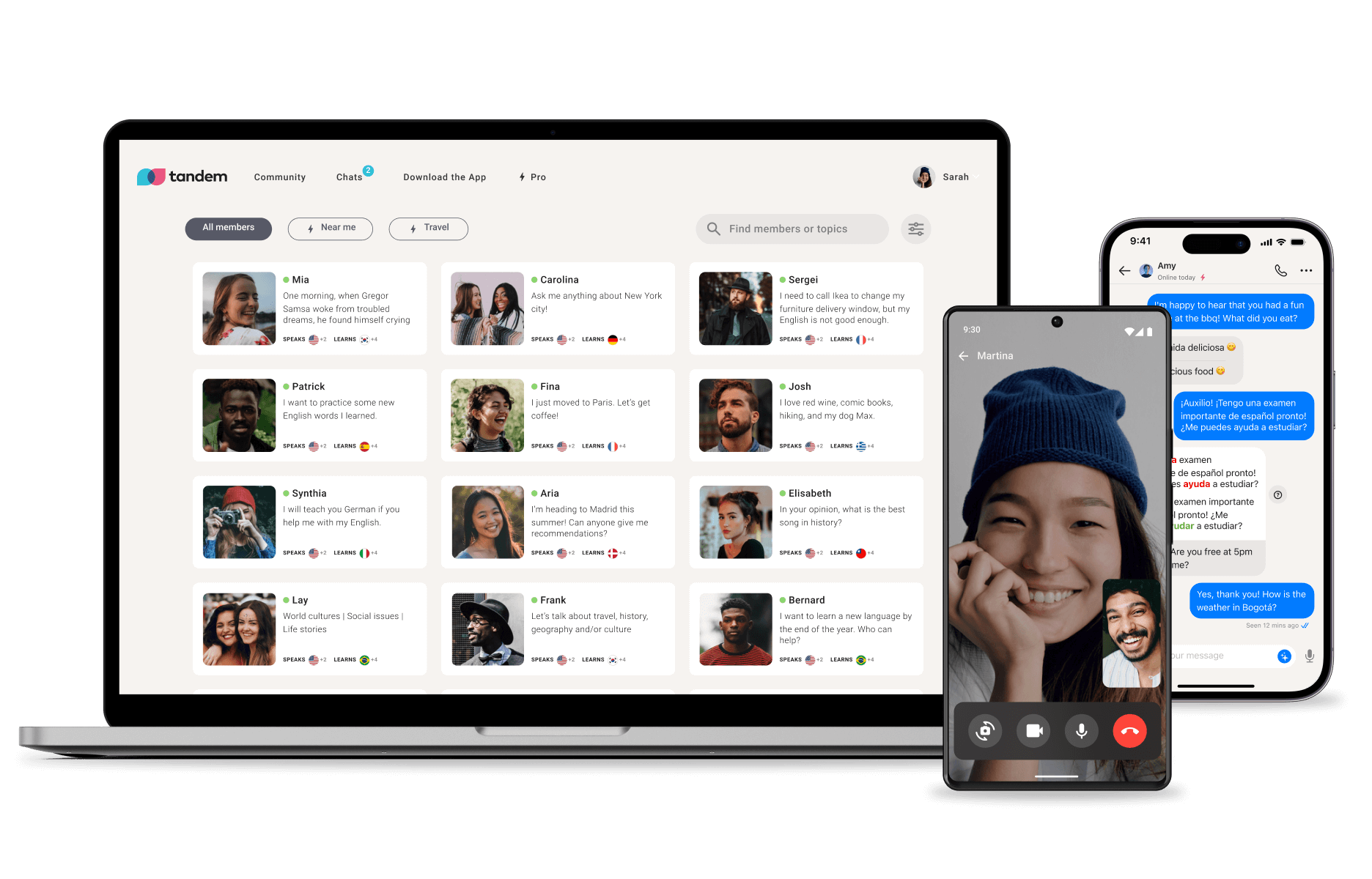
Tandem
Tandem connects you directly with native Danish speakers for peer-to-peer language exchange. Learners use it to swap voice notes, which lets you get direct feedback on your pronunciation from real people. It works for learners at all levels who want to practise real-world conversation. However, because it relies entirely on finding a willing partner, it does not offer structured lessons or a set curriculum. If you prefer a guided path or feel anxious chatting with strangers, this self-directed setup will frustrate you.
Dansk Udtaleordbog
Dansk Udtaleordbog shows you exactly how words sound in everyday speech. Compiled by Danish phoneticians, this online dictionary maps out natural, contemporary pronunciation using the International Phonetic Alphabet (IPA). It is highly specialised, which helps intermediate and advanced learners who want to master the subtle glottal stops and vowel shifts that standard dictionaries gloss over. However, it is not for absolute beginners. If you cannot read phonetic symbols yet, the dense IPA transcriptions will frustrate you, and the tool does not offer simplified spelling guides or interactive audio exercises.
Den Danske Ordbog
Den Danske Ordbog is the definitive Danish-Danish dictionary. Learners use it to check phonetic spelling, audio pronunciations, and tricky stød markings. Because it is entirely in Danish, absolute beginners will find the monolingual definitions challenging to use without a translation tool. However, for intermediate and advanced students aiming to stop translating in their heads, it provides the precise linguistic grounding that bilingual dictionaries lack.
Podcasts
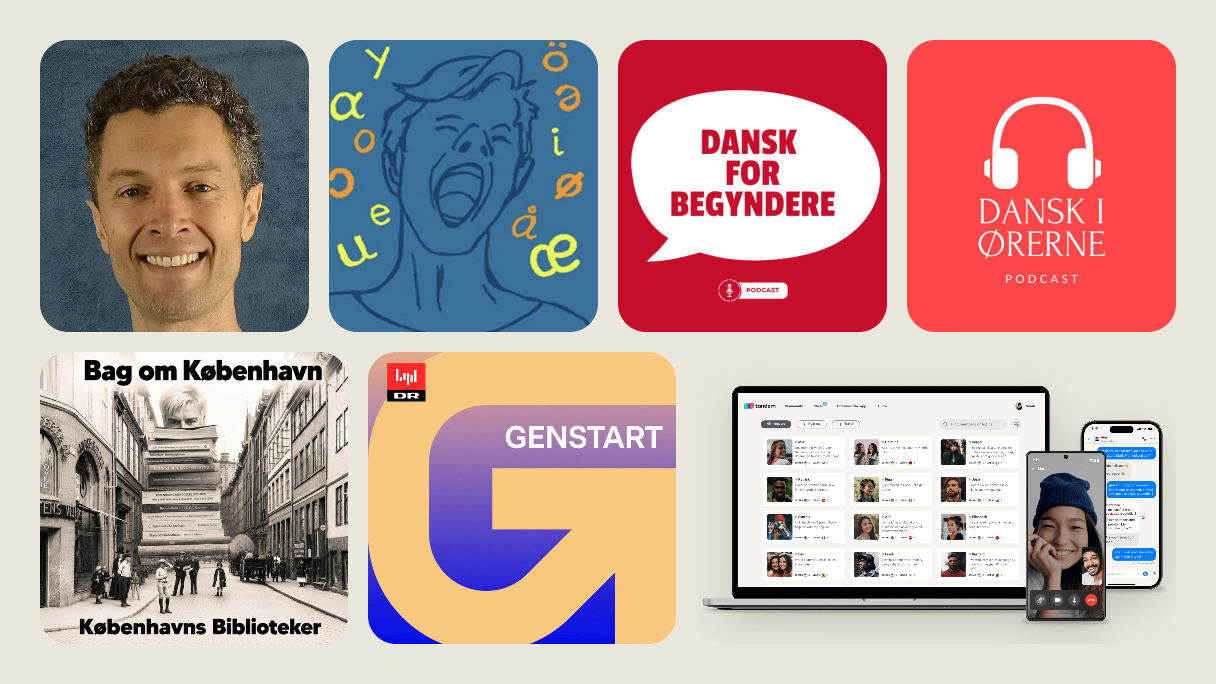
Bag om København
Copenhagen Libraries produces a narrative history podcast that is a useful listening tool for upper-intermediate learners. The narrator speaks with a slow, exceptionally clear native cadence, making it easier to follow complex historical tales. It tunes your ear to natural Danish pronunciation and sentence structure. However, because the episodes focus on historical events rather than everyday conversation, you will not learn modern street Danish or casual slang here. Beginners will find the advanced vocabulary frustrating, but B1 to B2 learners can use it to transition to native-speed media.
Dansk for begyndere
Emilie hosts this comprehensible input podcast, which helps early learners tune their ears to the tricky sounds of Danish. By speaking naturally but at a slowed, deliberate pace, she helps beginners adapt to the natural rhythm of the language without getting lost. It works for A1 to A2 learners who need to build listening confidence before tackling full-speed native conversations. However, intermediate speakers will find the slow pace basic, and because it is a pure listening tool, it does not offer any active speaking practice or feedback.
Dansk i ørerne
Sofie Lindholm hosts this educational podcast, speaking in clear, slow-paced Danish to help lower-intermediate learners transition to native conversations. The episodes cover Danish culture and daily life, giving you useful context alongside language practice. The free transcripts on her website make it easy to follow along and match spoken sounds to written words. However, the deliberate pace means advanced speakers will find it too slow, while absolute beginners will struggle without a basic vocabulary.
Genstart
DR's flagship daily news programme, Genstart, helps you master high-level Danish pronunciation. Advanced learners use this podcast as an ear-training tool because it features professional Copenhagen pronunciation. It works for those at B2 to C1 level who want to familiarise themselves with natural, fast-paced spoken Danish through current affairs. However, because it is a standard news broadcast designed for native speakers, it lacks vocabulary lists and transcripts. Beginners will find the speed and complex vocabulary overwhelming, so it does not work for anyone below an upper-intermediate level.
YouTube channels
Dansk Udtale
You need more than listening to master Danish speech mechanics. Dansk Udtale focuses entirely on how to produce the sounds, offering visual and acoustic guides to help you navigate silent letters and vowel placements. It is designed for beginner and intermediate learners who struggle with Danish pronunciation. However, this channel is strictly about pronunciation mechanics. You will not find grammar lessons or conversational practice here, so learners looking for a complete language course must pair it with other tools.
Mic's Languages
Danish pronunciation often trips learners up, especially the elusive glottal stop known as the stød. Mic's Languages explains this in an extensive, multi-part YouTube series that systematically breaks down the rules of this unique sound. It works for anyone from beginners to advanced learners who want to demystify Danish phonetics and improve their accent. However, because the channel focuses heavily on technical rules and linguistic mechanics, it will frustrate those who prefer intuitive, conversational practice. You will not find casual dialogues here, only a structured dive into the physics of the spoken language.

Websites and newsletters
Dansk Sprog Discord Server
Dansk Sprog Discord Server is an online space for real-time interaction. Learners use its dedicated text channels and live voice-chat events to practise Danish pronunciation and listening with other people. It works for learners at all levels who want to test their skills in a social environment. However, because it relies entirely on peer-to-peer chat and community-led events, you will not find structured lessons or professional teacher feedback here. It can feel overwhelming for quiet self-studiers who prefer a guided path.
Visit Dansk Sprog Discord Server
FAQ
Is Danish hard to pronounce?
Yes, Danish is difficult because the spoken language sounds very different from the written word. It has many flat vowel sounds and silent consonants. You learn by listening to native speakers and copying their mouth movements rather than trying to sound out the spelling.
Is D pronounced as L in Danish?
Not exactly, but the soft D sound can feel similar to an English speaker. It is made by placing your tongue behind your bottom teeth instead of the top. This creates a sliding sound that often gets confused with a soft L sound.
What is stød in Danish pronunciation?
This is a unique vocal press or catch in the throat. It sounds like a tiny pause or a sudden stop in the middle of a vowel. You need this sound to sound natural and make yourself understood.
How can I practise Danish pronunciation?
Listen actively and imitate immediately. Use audio tools that let you shadow native speakers. Speak aloud daily and record your voice to compare it with real speech patterns instead of just tapping screens to match words.
Listening to native speakers is only part of the challenge. To feel comfortable in conversations, you must practise making those sounds yourself. You can start with HearSay to get personalised audio lessons delivered directly to your phone, helping you speak and listen without staring at a screen.