
You want to learn a new language, but you might not know where to start. On one side, a famous green owl sends daily alerts to tap your screen. On the other, an old-school audio course asks you to speak out loud to an empty room. Choosing between Pimsleur and Duolingo means picking between two completely different worlds.
One app turns learning into a quick mobile game. The other forces you to listen closely and speak from day one. If you want to actually talk to real people, you need to know which tool is worth your time.
Verdict: Choose Pimsleur to build speaking confidence and a good accent with hands-free audio. Choose Duolingo for a free, game-like habit that builds your vocabulary and teaches basic reading.
| Feature | Pimsleur | Duolingo |
|---|---|---|
| Speaking Practice | Forces verbal recall and saying complex sentences out loud under time pressure. | Standard tier repeats written scripts; Max tier offers AI video chats. |
| Ear Tuning & Listening | Led by clear native speakers in practical, realistic conversational contexts. | Mix of highly synthetic TTS character voices and some native speaker stories. |
| Grammar Depth | Grammar rules are absorbed organically through sentence patterns. | Handled via guidebooks, implicit pattern-matching, and Explain My Answer AI. |
| Feedback Quality | Voice Coach provides detailed real-time pronunciation checks. | Standard voice checks are widely criticized as too lenient. |
| Offline Use | Audio lessons can be fully downloaded ahead of time for offline playback. | Offline lesson access is gated behind the paid Super Duolingo subscription. |
| Price Value | Expensive, starting at $14.95/month to $20.95/month with no free version. | Phenomenal, with a 100% complete and highly functional free tier. |
| Content Freshness | Low, core audio content remains largely unchanged over the decades. | High, adaptive interface with frequent A/B testing and AI-driven course scaling. |
| Levels Covered | Beginners only, capping around CEFR A2 or very low B1. | Broad, Spanish and French courses are structured to align up to CEFR B2. |
| Vocabulary Size | Tiny, teaching roughly 1,500 to 2,500 words across 5 levels. | High, larger courses expose learners to 2,000 to over 3,000 unique terms. |
| Motivation Mechanics | Low, relies entirely on personal, intrinsic learner discipline. | Aggressive, employing habit loops, streak systems, leaderboards, and notifications. |
| Price | Audio-Only Subscription (Single Language): $14.95 month; Premium Subscription (Single Language): $19.95 month; All Access Subscription (All Languages): $20.95 month; Premium Annual (Single Language): ~$150 year; All Access Annual (All Languages): ~$165 year; Lifetime Purchase (Single Language Course): ~$479 outright | Free Plan: $0 month; Super Duolingo: ~$12.99 month; Super Family Plan: ~$119.99 year; Duolingo Max: ~$30 month |
_Prices checked 2026-07-27._
Where Pimsleur wins the speaking battle
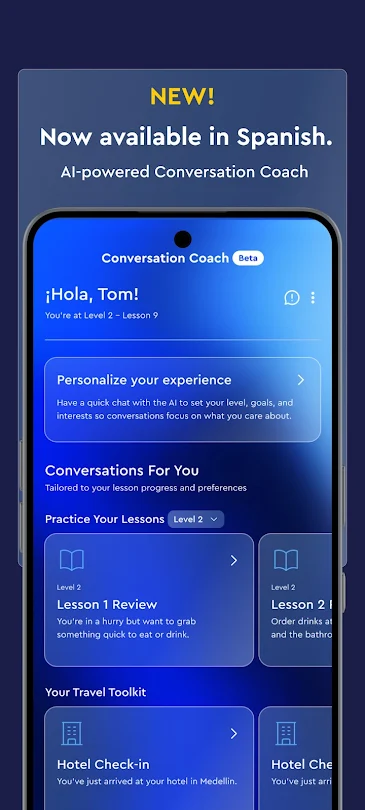
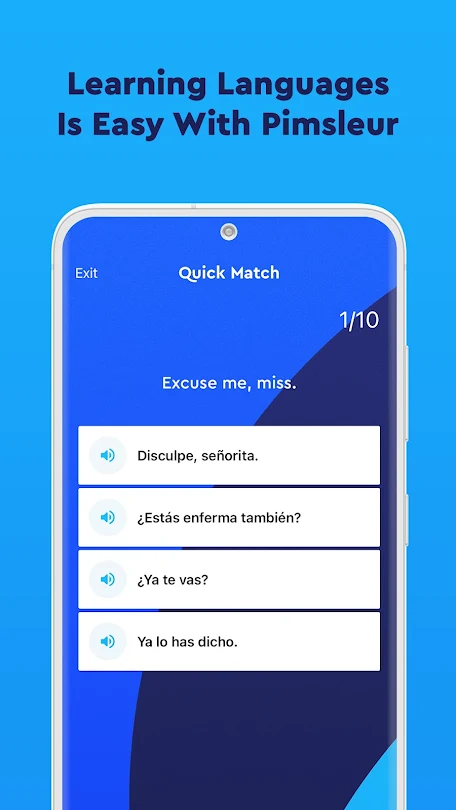
If you want to speak a new language, Pimsleur is a great choice because it gets you talking right away. The lessons make you say full sentences out loud under a tight time limit. This practice builds your confidence and helps you sound like a local.
The best part is that you can use Pimsleur completely hands-free. You can study while you walk the dog, cook dinner, or drive to work. Since you do not have to stare at a screen, you can learn anywhere. You can also download the audio lessons ahead of time to listen without internet.
Pimsleur uses real people talking in everyday situations, not robotic voices. The app also has a Voice Coach tool. It listens to your voice and tells you right away if you are saying the words correctly.
To learn more, visit the Pimsleur website.
Where Duolingo wins on habit and vocabulary
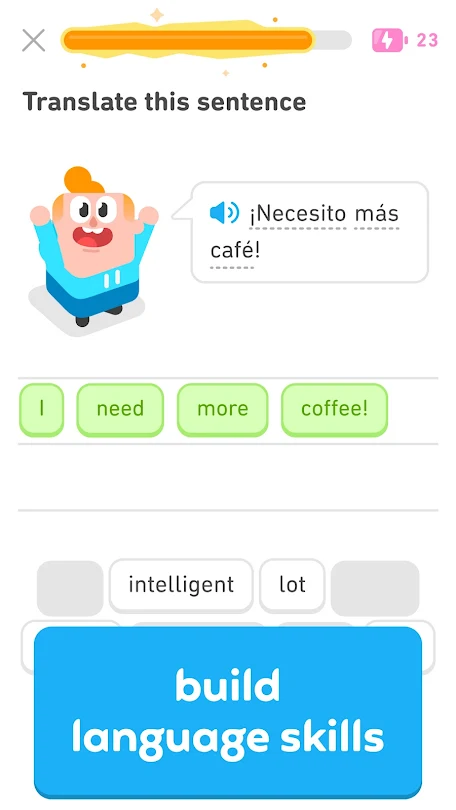
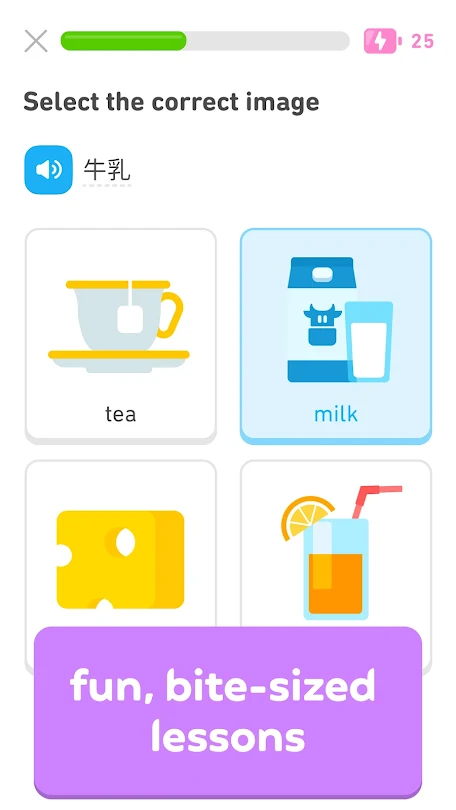
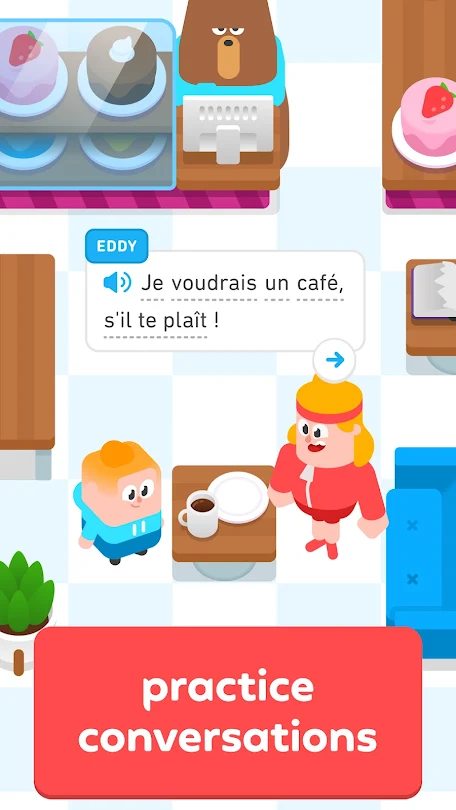
Duolingo is famous for a reason. It feels like a game, which makes it easy to build a daily habit. The app uses points and rewards to keep you coming back, so it is perfect if you struggle to stay motivated.
The app is very visual, so it is great for learning to read and spell. Duolingo also teaches many more words than Pimsleur. Its biggest courses teach over 3,000 words across 42 different languages.
The team updates the app often with new features. You can read about how they make these lessons on the Duolingo blog.
Best of all, Duolingo is free. You can use the whole course without paying a penny, but you will need their paid plan if you want to download lessons.
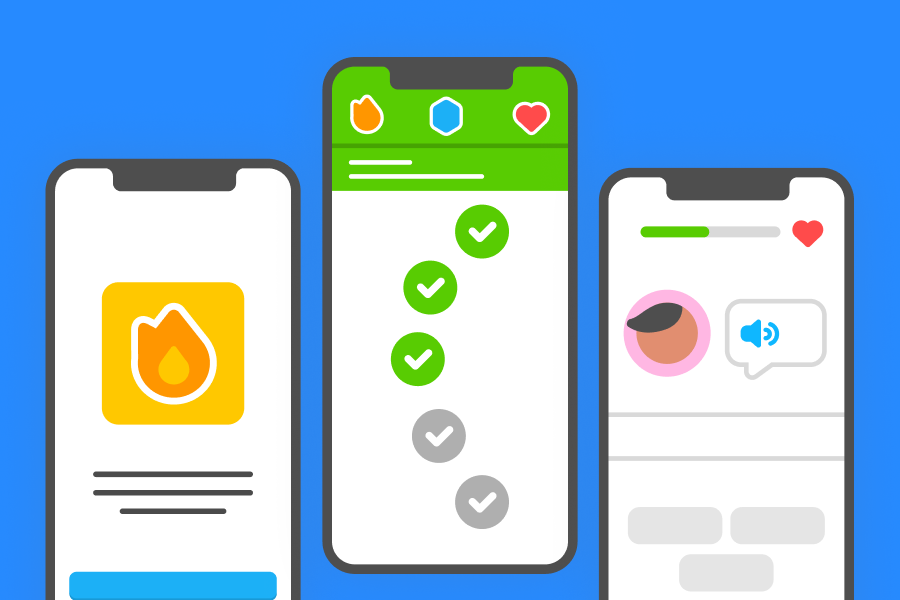 Image: blog.duolingo.com.
How the teaching methods compare
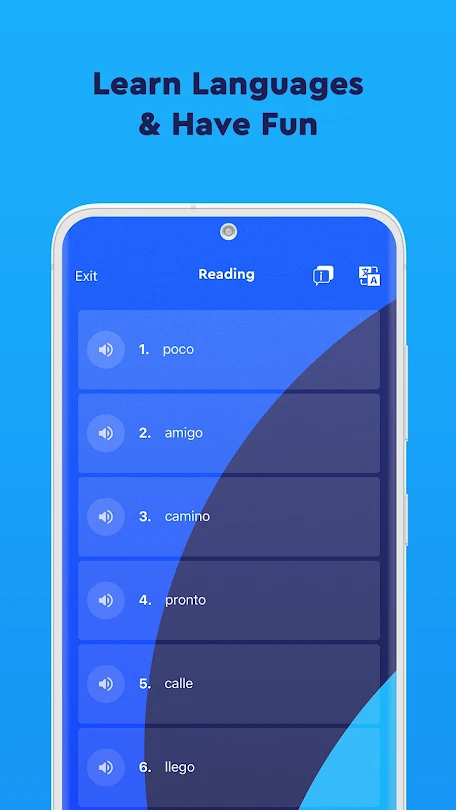
These two apps teach in completely different ways. Pimsleur focuses on listening and speaking. It helps you learn grammar naturally through patterns instead of making you memorize boring rules. But because it is mostly audio, you will not get much reading or writing practice. Some people also find the lessons a bit dry and repetitive.
Duolingo is a colorful game. It uses streaks and daily goals to keep you hooked so you do not lose your progress. You learn grammar through short guides, matching games, and an AI tool that explains your mistakes. But this game style has a downside. It can make you feel like you know more than you do. You might get great at tapping buttons on a screen, but you will still struggle to speak in real life.
The two apps also take you to different levels. Pimsleur is mostly for beginners. It stops at a basic level, which means you only learn about 1,500 to 2,500 words. Duolingo goes much further. Its Spanish and French courses can take you to an upper-intermediate level where you can have real conversations.
Price and value compared for every budget
When it comes to cost, these two tools are very different. Duolingo has a great free plan that costs nothing. It gives you access to every lesson. If you want to remove ads and download lessons, you can upgrade to Super Duolingo for $12.99 a month. They also have a family plan for $119.99 a year. If you want their smartest AI features, Duolingo Max costs about $30 a month.
Pimsleur does not have a free option. It costs more, but you have a few choices. An audio-only plan for one language is $14.95 a month. If you want extra games and quizzes, the Premium plan is $19.95 a month. To unlock all 50 of their languages, you can pay $20.95 a month. They also offer yearly plans starting at $150, or you can buy a course forever for $479.
Which one should you pick?
Choose Pimsleur if:
- You want to practice speaking out loud and sound like a local.
- You want to learn hands-free while you walk, cook, or drive.
- You want to learn from real human voices instead of computer sounds.
- You have the money for a paid monthly plan.
Choose Duolingo if:
- You want a free app to learn basic reading and writing.
- You need games and daily reminders to stay motivated.
- You want to learn a lot of words and see them on your screen.
- You want to try smart AI features like video calls.
The bottom line: Duolingo is best if you are on a budget and want to learn reading and writing for free.
FAQ
Is Pimsleur actually better than Duolingo?
Yes, if your main goal is speaking. Pimsleur makes you say full sentences out loud under a tight time limit, which builds real confidence. Duolingo is great for reading and vocabulary, but its speaking tests are too easy and will not prepare you for real conversations.
Can you become fluent with Pimsleur?
No, you cannot become fully fluent with Pimsleur alone. The course is made for beginners and only teaches basic skills. Since you only learn about 1,500 to 2,500 words, you will need other tools to reach an advanced level.
Can you use Pimsleur and Duolingo together?
Yes, using them together is a great idea. Pimsleur will train your ears and help you speak with a good accent. At the same time, Duolingo will teach you how to read the words and build a much larger vocabulary.
Why is Pimsleur so expensive compared to Duolingo?
Pimsleur costs more because it uses audio lessons recorded by real people. It does not have a free version, and plans start at $14.95 a month. Duolingo is free because it uses computer voices and shows ads.
Choosing the right tool depends on how you want to learn. If you want to skip the games and focus on real speaking practice, try HearSay to start talking today.